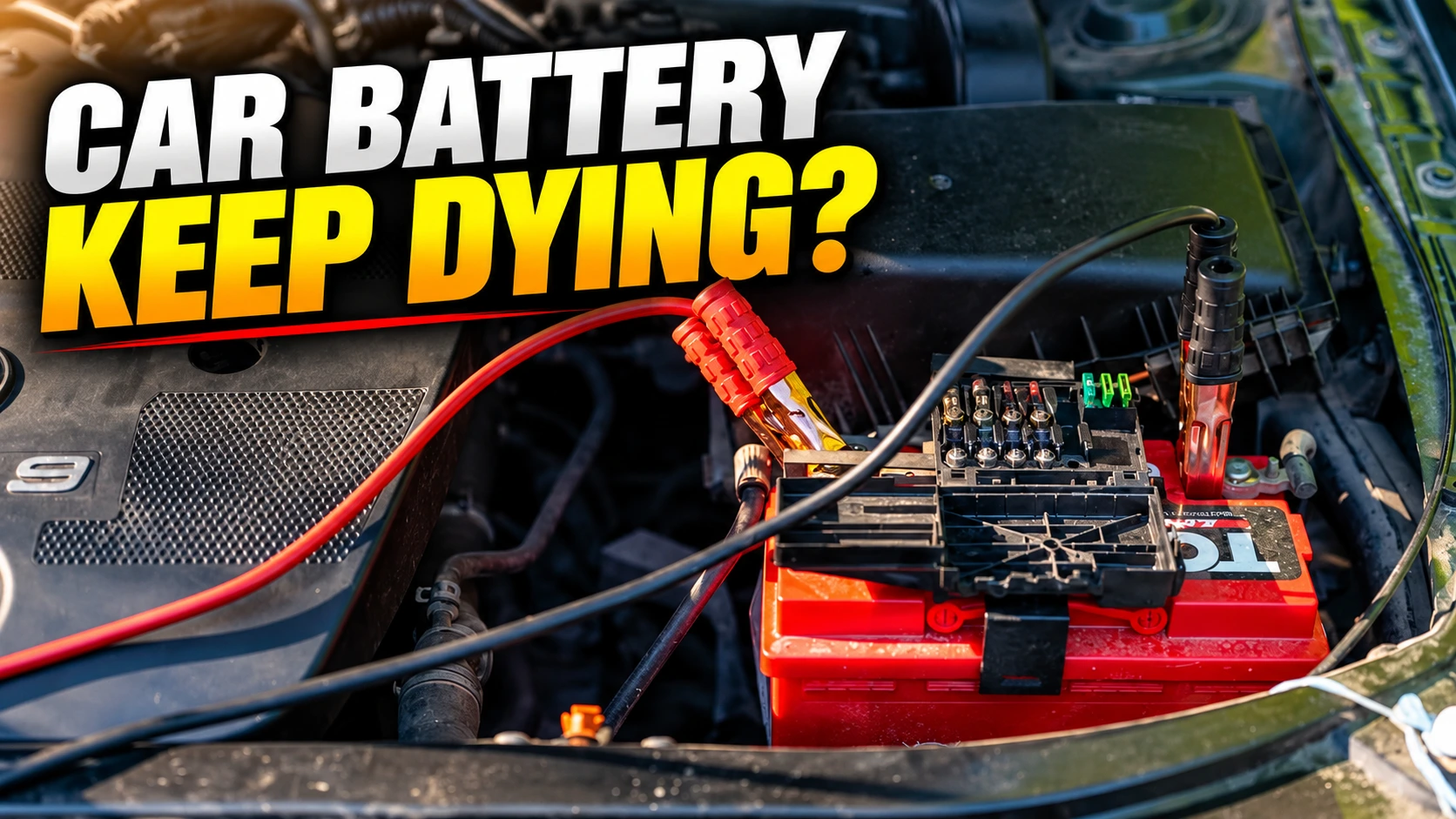
A car that struggles to start can make you think one thing immediately: “I need a new battery.”
But replacing the battery is not always the right first step.
If your car battery keeps dying, the real problem could be something else—such as a loose connection, a charging problem, a vehicle that sits unused for too long, or an electrical component that continues drawing power after the engine is turned off.
Before spending money on a replacement battery, there are several simple things you can check.
Why Does a Car Battery Keep Dying?
A healthy battery should normally provide enough power to start your vehicle repeatedly. When it keeps going dead, something is preventing the battery from staying properly charged or allowing it to lose power too quickly.
Here are some of the most common possibilities.
1. The Battery Is Old
Car batteries don’t last forever.
As a battery gets older, its ability to hold a charge gradually decreases. A battery may still start the car one day and then struggle the next, especially during extreme temperatures.
If your battery is several years old and you’ve started noticing:
- Slow engine cranking
- Dim headlights
- Clicking when you turn the key
- Repeated jump-starts
- Electrical accessories behaving strangely
it may simply be reaching the end of its useful life.
However, age alone doesn’t prove that the battery is the problem.
2. Corroded or Loose Battery Connections
Take a look at the battery terminals.
White, blue, or greenish corrosion around the connections can interfere with the flow of electricity. A loose battery terminal can cause similar symptoms.
Even if the battery itself is healthy, a poor connection can make the vehicle behave as though the battery is dead.
With the engine turned off, visually inspect the battery terminals and cables. They should be securely connected and free from excessive corrosion.
Important: Follow your vehicle manufacturer’s instructions when cleaning or servicing battery connections, and wear appropriate eye and hand protection.
3. The Alternator May Not Be Charging the Battery Properly
Your vehicle’s battery supplies power for starting, but the alternator is responsible for replenishing that power while the engine is running.
If the alternator or its related components aren’t working properly, the battery may gradually lose its charge even though the battery itself is relatively new.
Possible signs of a charging-system problem include:
- Battery warning light on the dashboard
- Headlights becoming unusually dim
- Electrical accessories behaving inconsistently
- Repeatedly dead batteries
- Engine stalling in some situations
If you repeatedly replace or recharge a battery and the problem returns, the charging system deserves attention.
4. Something May Be Draining the Battery While the Car Is Parked
Another common possibility is a parasitic electrical drain.
Some vehicle systems are designed to use a small amount of electricity even after the engine has been shut off. That’s normal.
The problem occurs when a component continues consuming significantly more power than expected.
Potential causes can include:
- An interior light that stays on
- A trunk or glovebox light that doesn’t switch off
- An aftermarket stereo
- A dash camera
- A phone charger or accessory
- An aftermarket alarm system
- Faulty electrical components
If the battery repeatedly dies after the vehicle sits overnight or for a few days, an electrical drain could be worth investigating.
5. You Don’t Drive the Car Often Enough
A vehicle that sits unused for long periods can develop battery problems.
The battery naturally loses some charge over time. Meanwhile, modern vehicles continue using small amounts of electricity while parked.
Short trips can also make the situation worse because the alternator may not have enough time to replace the energy used during starting.
If you have a vehicle that you don’t drive regularly, a properly rated battery maintainer can be useful. Always choose equipment that’s appropriate for your vehicle and follow the manufacturer’s instructions.
6. Extremely Hot or Cold Weather Can Affect Battery Performance
Temperature can have a major impact on a vehicle battery.
Very cold temperatures can make it harder for an engine to crank while reducing the battery’s available starting power.
Extreme heat can also accelerate battery deterioration and shorten its useful life.
That’s one reason a battery that seemed fine previously may suddenly become unreliable during a major temperature change.
7. Your Car May Be Showing Warning Signs Before the Battery Fully Dies
Many drivers don’t realize that a failing starting system can show warning signs before the vehicle refuses to start completely.
Pay attention if you notice:
Slow cranking:
The engine turns over more slowly than normal.
Clicking sounds:
You hear repeated clicking when attempting to start the vehicle.
Dim lights:
Headlights or interior lights appear noticeably weaker.
Electrical glitches:
Windows, locks, displays, or other electronics behave unusually.
Repeated jump-starts:
You need another vehicle or jump starter more often than expected.
These symptoms don’t automatically mean the battery is bad, but they are good reasons to investigate before you get stranded.
What Should You Check Before Buying a New Battery?
Before replacing the battery, work through a simple checklist.
Step 1: Inspect the battery
Look for obvious physical damage, swelling, leaking, or severe corrosion.
Step 2: Check the terminals
Make sure the battery connections are secure and clean.
Step 3: Think about the pattern
Ask yourself when the battery dies.
Does it happen:
- After the car sits overnight?
- After several days without driving?
- After short trips?
- Even while driving regularly?
The pattern can provide useful clues.
Step 4: Consider the charging system
If the battery repeatedly becomes discharged, have the vehicle’s charging system tested.
Step 5: Test the battery
A proper battery test can help determine whether the battery is capable of holding a charge and delivering adequate starting power.
A basic battery tester or multimeter can be useful for people who are comfortable performing simple automotive checks. More advanced testing may require professional equipment.
Can a Battery Charger Help?
Sometimes.
A battery charger can restore a discharged battery, but charging the battery doesn’t necessarily fix the reason it became discharged.
For example, imagine that a vehicle has an electrical drain while parked. You could fully recharge the battery, but the same drain may discharge it again.
That’s why it’s important to distinguish between:
“The battery is discharged.”
and
“The battery is defective.”
Those are not always the same thing.
What About a Jump Starter?
A portable jump starter can be a useful emergency item for drivers who want extra peace of mind.
Unlike traditional jumper cables, a portable jump starter can allow you to start a compatible vehicle without relying on another car.
When shopping for one, pay attention to factors such as:
- Compatibility with your vehicle
- Peak and starting current specifications
- Battery capacity
- Safety features
- Cable quality
- Ease of use
- Manufacturer instructions
A jump starter is an emergency tool, not a permanent solution to a failing battery or charging system.
When Should You Replace the Battery?
A battery replacement may make sense when testing shows that the battery can no longer hold an adequate charge or provide sufficient starting power.
You should also consider the battery’s age and condition.
However, replacing the battery without investigating recurring problems can lead to the same issue happening again.
For example:
Old battery + normal vehicle:
A new battery may solve the problem.
New battery + faulty alternator:
The new battery may eventually become discharged too.
New battery + electrical drain:
The new battery may continue losing power while parked.
That’s why diagnosis matters.
How to Reduce the Chance of a Dead Battery
A few simple habits can help reduce battery-related problems.
Drive the vehicle regularly
If your vehicle sits for long periods, consider using a suitable battery maintainer.
Don’t leave accessories running
Turn off lights, electronics, and other accessories when leaving the vehicle.
Keep battery connections clean
Periodically inspect the battery terminals for corrosion or loose connections.
Pay attention to warning signs
Don’t ignore slow starting, repeated jump-starts, or dashboard warning lights.
Keep emergency equipment in the car
A properly rated jump starter, jumper cables, flashlight, and other basic emergency equipment can be valuable during an unexpected breakdown.
Final Thoughts
A car battery that keeps dying doesn’t always mean you need to buy another battery.
The battery itself could be old or damaged, but the underlying problem could also be a charging-system issue, a poor connection, an electrical drain, infrequent driving, or environmental conditions.
Before spending money on a replacement, take a few minutes to look at the bigger picture.
Test the battery. Check the connections. Consider the charging system. Look for anything that could be draining power while the car is parked.
And if you drive regularly, keeping a reliable jump starter or battery maintenance equipment available can provide useful backup when something goes wrong.
A little troubleshooting now could save you from spending money on the wrong fix—and potentially save you from being stranded later.
Frequently Asked Questions
How do I know if my battery or alternator is bad?
A weak or dead battery can cause starting problems, while a charging-system problem can repeatedly leave a good battery discharged. Testing both the battery and charging system is the most reliable way to distinguish between them.
Why does my car battery die overnight?
Possible causes include an aging battery, a poor electrical connection, an interior light or other accessory remaining on, or an abnormal electrical drain.
Can a dead battery be recharged?
A discharged battery can sometimes be recharged, but that doesn’t necessarily mean the battery is healthy. A battery that repeatedly loses its charge should be tested.
How often should I replace my car battery?
There is no single replacement interval that applies to every vehicle and battery. Battery life depends on factors such as battery type, climate, driving habits, and vehicle use. Testing the battery’s condition is more useful than relying only on age.
Should I buy a battery charger or jump starter?
They serve different purposes. A charger is designed to recharge a battery, while a jump starter is primarily an emergency starting device. The right choice depends on your needs.
Disclaimer: This article is for general informational purposes and is not a substitute for professional automotive diagnosis or your vehicle manufacturer’s service instructions. Always follow the safety instructions provided with automotive tools and equipment.