
If you’ve ever stared at that “Change Oil Soon” light and wondered whether it’s really time, or whether the sticker on your windshield is just trying to sell you another visit, you’re not alone. Oil change intervals are one of the most misunderstood parts of car ownership. Some drivers still follow the old “every 3,000 miles” rule, while modern vehicles are often built to go 5,000, 7,500, or even 10,000-15,000 miles between changes.
Getting this wrong in either direction costs you. Change your oil too often and you’re wasting money on unnecessary maintenance. Wait too long and you risk engine wear, sludge buildup, and costly repairs down the road.
This guide breaks down exactly how often you actually need an oil change, what affects that interval, the warning signs you shouldn’t ignore, and how to make a smart, safe decision for your specific vehicle.
Quick Answer
Most vehicles need an oil change every 5,000 to 7,500 miles with conventional oil, or 7,500 to 10,000+ miles with synthetic oil. The exact interval depends on your car’s make, model, oil type, and driving conditions. Always check your owner’s manual or the vehicle’s built-in oil life monitor for the most accurate recommendation.
Why Oil Change Intervals Vary So Much
There’s no single universal answer because oil breaks down at different rates depending on several factors. Manufacturers set intervals based on how the engine is designed, the oil type it uses, and expected driving conditions.
Modern engines are built with tighter tolerances and better filtration than vehicles from 20 years ago. Combined with improved oil formulations, this means the old “every 3 months or 3,000 miles” rule is outdated for most cars on the road today.
The Main Factors That Affect Your Oil Change Interval
- Oil type (conventional, synthetic blend, full synthetic, high-mileage)
- Vehicle age and mileage
- Engine type (turbocharged engines often need more frequent changes)
- Driving conditions (city stop-and-go traffic vs. highway driving)
- Climate (extreme heat or cold affects oil breakdown)
- Towing, hauling, or hard driving habits
Two people who own the exact same car model can have completely different ideal oil change schedules simply based on how and where they drive.
Conventional Oil vs. Synthetic Oil: Why It Matters
The type of oil in your engine plays one of the biggest roles in determining your oil change interval.
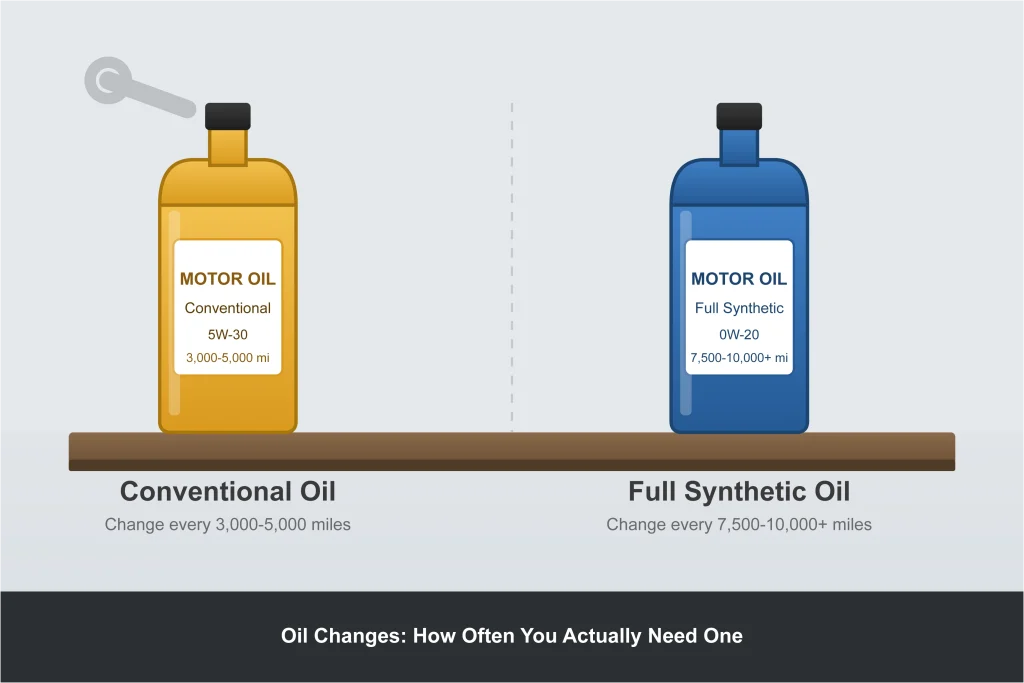
| Oil Type | Typical Interval | Best For | Cost |
|---|---|---|---|
| Conventional Oil | 3,000–5,000 miles | Older vehicles, simple engines | Lowest cost |
| Synthetic Blend | 5,000–7,500 miles | Daily drivers, mixed conditions | Moderate cost |
| Full Synthetic | 7,500–10,000+ miles | Modern engines, turbocharged cars | Higher cost |
| High-Mileage Oil | 5,000–7,500 miles | Vehicles over 75,000 miles | Moderate cost |
Full synthetic oil resists heat breakdown better and keeps engine components cleaner over time, which is why many manufacturers now use it as the factory-recommended standard. If you’re unsure which type your vehicle needs, the American Petroleum Institute’s motor oil guide offers a helpful breakdown of oil classifications and what they mean for your engine.
How to Find Your Vehicle’s Actual Recommended Interval
Rather than guessing, there are three reliable ways to know your true oil change interval.
- Check your owner’s manual. This is the single most accurate source, since it reflects your exact engine and manufacturer testing.
- Use your car’s oil life monitoring system. Most vehicles built after 2010 track oil condition electronically and alert you when a change is genuinely needed.
- Ask a trusted mechanic to confirm based on your driving habits, especially if you do a lot of towing, short trips, or stop-and-go driving.
Do not rely solely on oil change shop stickers. Many quick-lube locations default to a 3,000-mile recommendation regardless of your vehicle’s actual needs, which can lead to unnecessary spending over time.
Driving Conditions That Shorten Oil Change Intervals
Manufacturers often list two service schedules: normal and severe (sometimes called “special”) driving conditions. Many U.S. drivers unknowingly fall into the severe category.
Signs You May Need More Frequent Oil Changes
- Frequent short trips under 10 minutes
- Regular stop-and-go city traffic
- Extreme heat or cold climates
- Frequent towing or carrying heavy loads
- Dusty or off-road driving conditions
- Extended idling (delivery drivers, rideshare drivers)
If two or more of these apply to you, it’s worth changing your oil closer to the shorter end of your manufacturer’s recommended range.
Warning Signs Your Car Needs an Oil Change Now
Even with a solid schedule, it’s important to recognize signs that your car needs attention sooner than expected.
- Dark, gritty oil on the dipstick instead of an amber color
- Engine noise or ticking that wasn’t there before
- Oil change or check engine light illuminated on the dashboard
- Burning oil smell inside the cabin
- Exhaust smoke that appears bluish or gray
- Oil level consistently low between changes
If you notice more than one of these signs at the same time, it’s best to have your vehicle inspected soon rather than waiting for your next scheduled interval.
Ignoring these symptoms can allow contaminated oil to circulate through the engine, increasing friction and heat. Over time, this raises the risk of premature engine wear, which is one of the most expensive repairs a vehicle owner can face.
Expert Tip
Expert Tip: Keep a simple log of your oil change dates, mileage, and oil type in your glovebox or phone notes. This makes it easy to spot patterns, avoid duplicate changes, and give accurate information to any mechanic working on your car in the future.
When to Call a Professional Mechanic
While checking your oil level and color is something most vehicle owners can do at home, there are situations where a professional opinion matters.
You should have a mechanic inspect your vehicle if:
- You notice metal shavings or debris in the oil
- The oil light stays on even after a recent change
- You hear knocking sounds from the engine
- You’re unsure which oil type or viscosity your engine requires
- Your vehicle has a turbocharged or high-performance engine
A mechanic can also check for oil leaks, which may cause you to lose oil faster than normal without an obvious dashboard warning. Attempting to diagnose internal engine noises or persistent oil pressure issues without proper training can lead to misdiagnosis or further damage, so this is not typically a safe DIY task.
For general vehicle maintenance and safety system upkeep, the National Highway Traffic Safety Administration’s vehicle maintenance guidance explains how routine service, including oil changes, connects to overall vehicle safety and reliability.
How Mileage and Vehicle Age Affect Oil Change Needs
As vehicles age, engines naturally experience more wear, which can affect how oil performs over time.
- Under 75,000 miles: Standard synthetic or conventional oil intervals typically apply.
- 75,000–150,000 miles: High-mileage oil formulas may help reduce leaks and improve seal conditioning.
- Over 150,000 miles: More frequent oil monitoring is often recommended, since older engines may burn oil faster.
Older vehicles with higher mileage sometimes benefit from slightly shorter intervals, even if they use synthetic oil, simply because internal engine tolerances have changed over time.
Common Mistakes Vehicle Owners Should Avoid
- Ignoring the oil change or maintenance light instead of scheduling service promptly
- Assuming every vehicle needs an oil change every 3,000 miles, regardless of oil type
- Mixing oil types without checking manufacturer compatibility
- Choosing the cheapest oil change option without confirming the correct oil grade
- Skipping oil changes during winter or summer when driving conditions are actually harsher on oil
- Not checking oil level between changes, especially on older vehicles
- Relying only on a quick-lube sticker instead of the owner’s manual
Avoiding these mistakes helps protect your engine’s lifespan and can prevent costly repairs later.
FAQs
How often should I really change my oil?
Most vehicles need an oil change every 5,000 to 7,500 miles with conventional oil, or up to 10,000+ miles with full synthetic oil, depending on your manufacturer’s recommendation.
Is it bad to go over the recommended oil change mileage?
Yes, driving too far past your recommended interval can cause oil to break down, reducing lubrication and increasing engine wear risk.
Does synthetic oil really last longer than conventional oil?
Yes, full synthetic oil resists heat breakdown better and generally lasts longer between changes compared to conventional oil.
Can I change my own oil at home safely?
Yes, for many vehicles, an oil change is a manageable DIY task if you follow the correct oil type, amount, and disposal guidelines, though vehicles with complex underbody shielding may be easier to service professionally.
What happens if I never change my oil?
Old, contaminated oil loses its ability to lubricate properly, which can lead to increased friction, overheating, and eventually serious engine damage.
Do electric vehicles need oil changes? No,
fully electric vehicles do not use engine oil since they don’t have a traditional combustion engine, though they still require other periodic maintenance.
How do I know what oil type my car needs? Check your owner’s manual or the oil cap under the hood, which usually lists the recommended oil viscosity and type for your specific engine.
Conclusion
There’s no single number that applies to every driver when it comes to oil changes. Your true interval depends on your oil type, driving habits, climate, and vehicle age, not outdated rules of thumb. The safest approach is always checking your owner’s manual, paying attention to your car’s oil life monitor, and watching for warning signs like dark oil, unusual noises, or dashboard alerts.
Staying on top of oil changes is one of the simplest ways to protect your engine, avoid expensive repairs, and keep your vehicle running safely for years to come. When in doubt, don’t guess, confirm your vehicle’s specific needs and schedule your next oil change based on real data, not assumptions.