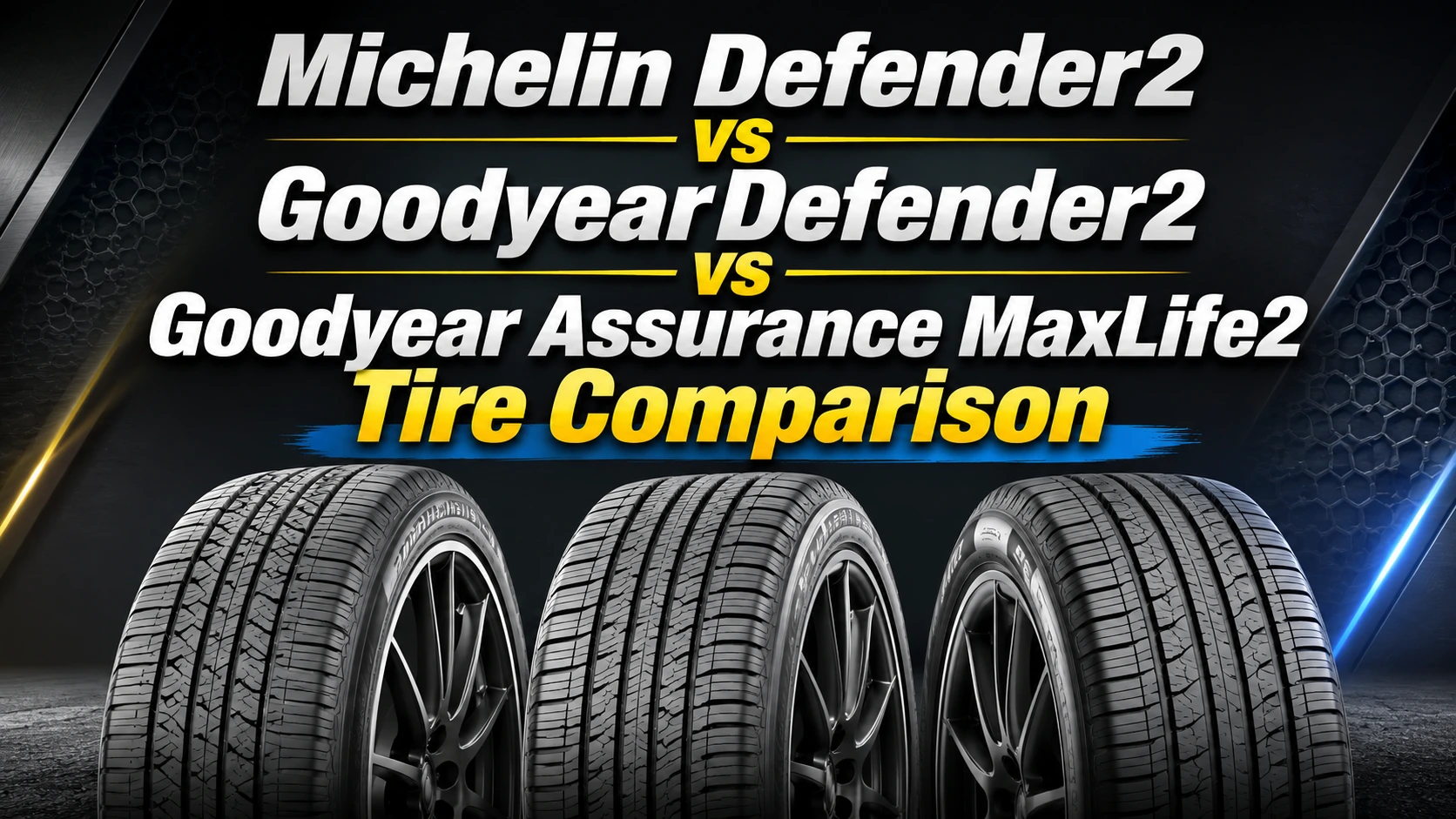
If your all-season tires are getting close to their wear bars, you’ve probably landed on these two names during your search: the Michelin Defender2 and the Goodyear Assurance MaxLife2. Both are long-life, comfort-focused touring tires built for everyday sedans, and both show up constantly in Michelin vs Goodyear reviews because they compete directly on the same shelf.
Picking the wrong tire isn’t just a comfort issue — it affects your braking distance, fuel economy, and how your car handles in rain or light snow. This guide breaks down how these two tires actually compare on the things that matter to a daily driver: tread life, ride quality, wet-weather grip, price, and long-term value.
Quick Answer
The Michelin Defender2 generally offers a higher treadwear rating, a quieter ride, and slightly better wet grip, while the Goodyear Assurance MaxLife2 tends to cost less per tire and offers marginally better rolling resistance for fuel economy. For most sedan and crossover drivers, Michelin edges ahead on longevity and comfort, while Goodyear wins on upfront value.
What These Two Tires Are Built For
Both tires fall into the all-season touring category — designed for comfort, tread life, and predictable handling rather than aggressive performance. They’re common factory-style replacements for sedans, minivans, and crossovers used mainly for commuting, errands, and highway trips.
Neither tire is designed as a dedicated winter tire. In snow and ice, both rely on all-season tread compounds and sipes rather than the deep, soft-rubber tread of a true winter tire, so drivers in heavy-snow regions should still consider a seasonal winter set.
Image Placeholder 1 PlacementDirectly after the “What These Two Tires Are Built For” section PurposeHelps readers visually compare the tread pattern differences between the two tires side by side CaptionSide-by-side tread comparison: Michelin Defender2 vs Goodyear Assurance MaxLife2 Alt Textmichelin defender2 vs goodyear assurance maxlife2 tread pattern comparison Image PromptA realistic close-up studio photo of two all-season passenger car tires standing side by side on a plain gray background, showing detailed tread patterns, soft even lighting, no visible brand logos Recommended Size1200 × 675 px Suggested File Namemichelin-vs-goodyear-tread-comparison.jpg Suggested Surrounding TextNotice how each tire’s tread blocks and sipe pattern are designed differently to balance quiet comfort with wet-weather grip.
Dry and Wet Performance
Dry Handling and Braking
Both tires deliver stable, predictable handling in dry conditions, which is what most daily commuters actually need. Michelin’s directional tread design tends to feel slightly more planted during quick lane changes, while Goodyear’s Assurance MaxLife2 focuses on smooth, linear steering response rather than sporty feel.
Wet-Weather Grip and Hydroplaning Resistance
Wet traction is where tire choice matters most for safety. Both tires use circumferential grooves to channel water away from the contact patch, reducing hydroplaning risk at highway speeds. According to NHTSA’s tire safety guidance, worn tread — regardless of brand — is one of the leading contributors to wet-weather crashes, which is why tread depth matters more over time than the brand you originally chose.
Snow and Light Winter Traction
Both tires include sipes designed to bite into light snow, and both carry the M+S (mud and snow) rating common to all-season tires. Neither carries the severe-service snowflake symbol used for dedicated winter tires, so drivers in areas with regular heavy snowfall should not treat either tire as a substitute for winter rubber.
Tread Life, Warranty, and Long-Term Value
This is usually the deciding factor for budget-conscious drivers. Independent tire comparisons list the Goodyear Assurance MaxLife2 with a UTQG treadwear rating around 740, while the Michelin Defender2 carries a rating closer to 820 — meaning Michelin is built, on paper, to resist wear somewhat longer. Manufacturer mileage warranties for both tires typically fall in a similar range, though exact terms vary by tire size and retailer, so it’s worth confirming current numbers directly with the seller before you buy.
Pricing tends to favor Goodyear, with the Assurance MaxLife2 often running somewhat less per tire than the Michelin Defender2 in comparable sizes. Over a full set of four tires, that difference can add up — but it should be weighed against expected tread life, not just sticker price.
Expert Tip
Don’t compare tires on price-per-tire alone. Divide the total warrantied mileage by the total set price to get a rough cost per mile — that number tells you far more about long-term value than the upfront cost.
Ride Comfort and Road Noise
Both tires are engineered for a quiet, comfortable ride, which is the whole point of the “touring” category. Drivers commonly report the Michelin Defender2 as slightly quieter at highway speeds, while the Assurance MaxLife2 still performs well above budget all-season tires in this category. If cabin noise is a top priority — say, for a daily highway commute — this is a point in Michelin’s favor.
Fuel Efficiency and Rolling Resistance
Rolling resistance affects how much extra fuel your engine burns just to keep the tire turning. The Goodyear Assurance MaxLife2 typically carries a slightly better rolling-resistance rating than the Michelin Defender2, giving it a small edge in fuel economy over time. The difference is modest and won’t outweigh other factors for most drivers, but it can matter over tens of thousands of highway miles. The U.S. Department of Energy’s fuel economy resource notes that keeping tires properly inflated has a bigger overall impact on mileage than the tire brand itself.
Vehicle Compatibility Considerations
Both tires are offered across a wide range of common sedan, coupe, and crossover sizes, but availability varies by size and load rating. Before buying either tire, check:
- Your vehicle’s original tire size, found on the driver’s door jamb sticker or in the owner’s manual
- Load index and speed rating, which must match or exceed your vehicle manufacturer’s specification
- Whether your vehicle uses a specific OE (original equipment) tire code, which some manufacturers require for warranty compliance
Both Michelin’s official product documentation and Goodyear’s official tire specifications let you search by exact vehicle make, model, and year to confirm the correct size before ordering.
Maintenance and Inspection Guidance
Regardless of which tire you choose, tread life depends heavily on maintenance habits. A few basics go a long way:
- Rotate tires every 5,000–7,500 miles to promote even wear across all four positions.
- Check tire pressure monthly, since both underinflation and overinflation cause uneven wear and reduce fuel efficiency.
- Inspect tread depth regularly using a simple tread depth gauge or the penny test, replacing tires once tread nears 2/32 of an inch.
- Get a wheel alignment check if you notice uneven wear patterns or pulling to one side.
Driving conditions matter too. City stop-and-go driving, mountain roads, extreme heat, and heavy highway mileage all wear tires differently — so your real-world results may vary from published warranty mileage figures.
Image Placeholder 2 PlacementWithin the “Maintenance and Inspection Guidance” section, after the numbered list PurposeShows readers how to visually check their own tread depth at home before deciding on a replacement tire CaptionChecking tread depth before choosing between the Michelin Defender2 and Goodyear Assurance MaxLife2 Alt Textchecking tire tread depth before michelin vs goodyear tire comparison Image PromptA realistic photo of a person’s hand holding a tread depth gauge against a car tire in a driveway, daylight, focus on the gauge and tread Recommended Size900 × 600 px Suggested File Namechecking-tire-tread-depth.jpg Suggested Surrounding TextA quick at-home tread check can tell you whether it’s time to replace your tires at all, before you even compare brands.
Comparison at a Glance
| Factor | Michelin Defender2 | Goodyear Assurance MaxLife2 |
|---|---|---|
| Category | All-season touring | All-season touring |
| Treadwear rating (UTQG) | Higher (around 820) | Lower (around 740) |
| Ride noise | Slightly quieter | Quiet, slightly less so |
| Rolling resistance / fuel economy | Good | Slightly better |
| Typical price per tire | Higher | Lower |
| Best for | Highway commuters wanting long tread life and quiet ride | Budget-conscious drivers wanting solid all-around value |
Note: Exact specs, warranty terms, and pricing vary by tire size, retailer, and region — always confirm current details before purchasing.
When to Call a Professional Mechanic
Tire selection is one thing — installation and diagnosis are another. Call a professional mechanic or tire shop if you notice uneven or cupped tread wear, vibration at highway speed, a pulling sensation while braking, or a tire that won’t hold pressure. These can point to alignment, suspension, or balance issues that a new tire alone won’t fix. Mounting, balancing, and proper torque on lug nuts should always be handled by a trained technician to avoid safety risks on the road.
Common Mistakes Vehicle Owners Should Avoid
- Buying by brand reputation alone instead of checking the specific tire size, load index, and speed rating for your vehicle.
- Ignoring the tire’s UTQG treadwear rating and comparing only sticker price.
- Skipping regular rotations, which shortens tread life regardless of which tire you choose.
- Assuming an all-season tire performs like a winter tire in heavy snow or ice.
- Delaying replacement until tread is dangerously low instead of monitoring depth proactively.
- Choosing the cheapest tire available without checking wet-weather safety ratings.
FAQs
Which lasts longer, the Michelin Defender2 or the Goodyear Assurance MaxLife2?
The Michelin Defender2 generally carries a higher UTQG treadwear rating, suggesting somewhat longer tread life on paper, though real-world results depend on driving habits, alignment, and rotation schedule.
Is the Goodyear Assurance MaxLife2 a good winter tire?
No. It’s an all-season tire suited to light snow, not a dedicated winter tire. Drivers in regions with heavy snow or ice should use a seasonal winter tire set for the best safety margin.
Are these tires safe for daily highway driving?
Yes. Both are designed as everyday touring tires for sedans and crossovers, with a focus on comfort, tread life, and stable highway handling.
How much does it cost to replace a full set of these tires?
Pricing varies by tire size, retailer, and region, and the Assurance MaxLife2 typically runs somewhat less per tire than the Defender2. Always get a current quote for your exact vehicle’s tire size before budgeting.
Do I need an alignment when I replace my tires?
Not always, but it’s worth having a shop check alignment if your old tires wore unevenly or if it’s been a long time since your last check — new tires wear faster on a misaligned vehicle.
Can I mix these two tire brands on the same vehicle?
It’s not recommended. Mixing tire brands or tread patterns can affect handling balance and braking consistency, especially in wet conditions. Replace tires in matching sets whenever possible.
Where can I confirm the exact tire size for my car?
Check the sticker on your driver’s-side door jamb or your owner’s manual, and always confirm compatibility using your manufacturer’s specifications before ordering either tire.
Final Verdict
Both the Michelin Defender2 and Goodyear Assurance MaxLife2 are strong, trustworthy choices in the all-season touring category, and either one will serve a typical sedan or crossover well. If your priority is longer tread life and a slightly quieter ride, Michelin’s Defender2 is the stronger pick. If you want solid all-around performance at a lower upfront cost, the Goodyear Assurance MaxLife2 delivers excellent value.
Whichever tire you choose, prioritize safety over price alone: check your exact tire size, inspect tread depth regularly, and don’t delay replacement once wear indicators appear. When in doubt, a quick visit to a trusted mechanic or tire shop can confirm the right fit for your specific vehicle before you spend a dollar.